The first thing the principal noticed wasn’t the crowd. It was the wind.
It came sideways across the oval—steady, insistent, the kind of wind that turns a neat plan into a scramble and makes every clip, pole, and stake feel like it’s being tested by an invisible judge. The kind of wind that makes parents clutch brochures tighter, makes teachers wonder if the sausage sizzle will survive, and makes a student ambassador’s carefully styled hair give up instantly.
Open Day was happening anyway.
By 7:10 a.m., the campus was already moving: cones placed, directional signs taped to posts, volunteers unloading tubs of lanyards, sports captains in their best uniforms trying to look calm. But there was one problem the school had been carrying for years—long before the weather forecast turned ugly.
They didn’t look like the school they were.
Not in photos. Not at the entry. Not from the carpark. Not from the moment a family pulled up and asked the silent question every visitor asks within the first ten seconds:
“Is this a place that has it together?”
Because in past years, the field looked like a collection of separate efforts. A borrowed gazebo here, a wobbly banner there, mismatched signage near the hall, a trestle table with a wrinkled cloth doing its best to look official. The staff were excellent. The programs were strong. The results were real.
But the first impression was… improvised.
And schools don’t get unlimited first impressions.
This year, the leadership team decided to treat Open Day like what it actually was: a live brand moment. Not “branding” in the shallow sense—more like clarity. Confidence. A visual promise that matched what families would discover inside classrooms.
They wanted it to feel bold. Energetic. Modern. A campus with direction.
So they built the day around three anchors.
1. A basecamp that couldn’t be ignored
The plan started at the entrance—because entrances are where decisions quietly happen. Not final decisions, but directional ones. Where the nervous parent chooses whether they feel welcomed, and where students decide whether this place is exciting or intimidating.
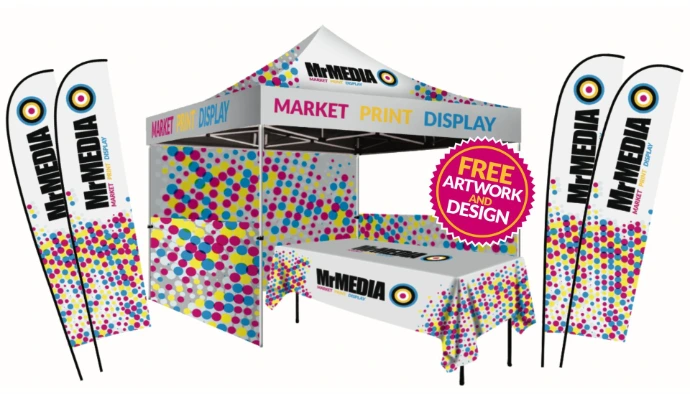
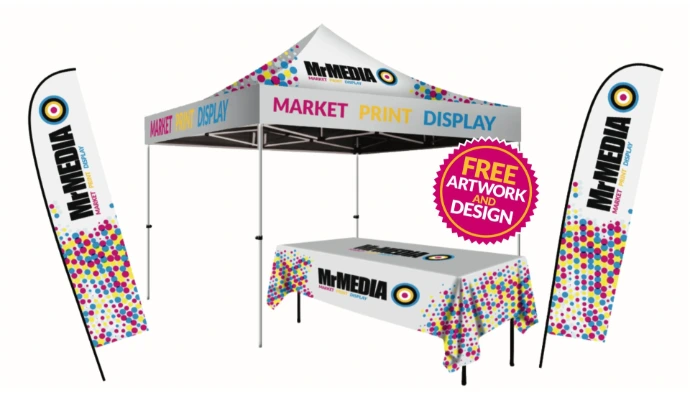
That’s where the World’s Toughest 10 x 10' Tent went.
Not tucked away. Not “nearby.” It became the first yes.
A tent that didn’t look temporary. A canopy that read from a distance. A frame that didn’t flinch when the wind picked up and the first gust hit like a shoulder-check.
Under it: information, maps, schedules, smiling staff who weren’t fighting the setup. The tent didn’t just provide shade; it created certainty. It said: Start here. We’re ready for you.
2. Visibility that worked before people arrived
The carpark began filling at 8:00. And here’s the truth about outdoor events: most people don’t “arrive” at the tent. They arrive at the edge of the site, scanning. Looking for cues.
That’s why the school added telescopic flags—tall, crisp, and designed for distance. They didn’t replace signs; they did a different job entirely. They acted like beacons. They told families where the day was happening before anyone had to ask.
One flag marked parking. One flagged the Open Day entrance. A pair framed the main walkway like an invitation you could see from across the oval.
In the wind, they moved—alive, attention-grabbing, energetic. They looked like momentum.
And they gave the school something they’d never had before: a visual line of sight. Parents stopped wandering and started walking with purpose.
3. The small detail that made everything feel premium
By mid-morning, the tent was busy. The flags were doing their job. Visitors were flowing. Photos were being taken. Social posts were being made.
And the detail that quietly elevated the entire experience wasn’t a big structure at all.
It was the tables.
Across the site—at faculty booths, the uniform shop, the fundraising stall, the student sign-up stations—each table wore the same look: branded tablecloths, fitted and clean, carrying the school identity like a uniform.
In previous years, tables were the weak link: they always looked like “logistics.” This year, they looked like part of the story.
And that matters, because people judge organizations by what they repeat consistently. A great tent can be dismissed as a one-off. A flag can be seen as a nice touch. But when the entire site—every interaction point—feels coordinated, visitors stop thinking “event” and start thinking “institution.”
When the weather tried to steal the day
At 11:30, the wind surged again. You could see it coming in the trees first, then feel it in the temperature shift, then hear it as a rising hush over the oval.
A few families hesitated at the entrance. Someone tightened their grip on a toddler. A volunteer glanced toward the setup with the kind of look that says, please don’t let anything go flying.
This is where premium quality becomes more than a tagline.
The World’s Toughest Tent stayed put. No drama, no panic, no staff member abandoning their role to chase equipment. It was what it claimed to be: tough. Designed for the real world—where events don’t happen in perfect conditions.
The flags flexed and moved like they were meant to, continuing to do what they were there to do: attract attention without becoming a problem.
And because the core structures were solid, the people could focus on what mattered—the conversations. The tours. The moments that actually make a family picture their child in that environment.
The real win wasn’t the crowd
Yes, attendance was up. Yes, the day looked great in photos. Yes, the school’s recap video finally looked like something they were proud to share.
But the biggest shift was internal.
Staff didn’t feel like they were “setting up an event.” They felt like they were hosting. Student ambassadors looked more confident standing behind a premium table presence. Volunteers moved faster because everything had a place and looked like it belonged. The school felt more like itself—bold, energetic, capable.
Branding didn’t replace substance. It revealed it.
And next year, when Open Day rolls around again, the school won’t be starting from scratch. They’ll be deploying a system: a repeatable, durable setup that turns a windy oval into a welcome mat.
Because outdoors will always be outdoors.
The only question is whether your setup is built for it.
If your next Open Day, community event, or outdoor activation needs a setup that looks premium and holds up in real conditions, build it around the pieces that do the heavy lifting: a tent that anchors, flags that guide, and tablecloths that finish.
---